

Authors: Ahmad Awaludin Mufid, Arnentis, Mike Damayanti, and Shofana Erimalata
Reviewers: Dwi Martutiningrum, Farid Al-Firdaus, and Nur Zahroh Hamidah
The Future of Indonesia
The Central Bureau of Statistics (BPS) estimates that Indonesia’s population will reach more than 300 million people by 2045, of which more than 60% are expected to live in urban areas (Ministry of PAN-RB, 2022). Meeting food needs in urban areas is increasingly difficult because agricultural land is increasingly limited which causes dependence on food supplies from outside the city (Gultom & Harianto, 2022). Transportation of foodstuffs from outside cities leaves a carbon footprint and creates inefficiencies in foodstuffs, especially perishable vegetables (FAO, 2020; Ministry of National Development Planning / Bappenas, 2021b). Circular economy is a new economic practice in sustainable practices as an effort to overcome resource scarcity by using the principle of material circulation and the practice of material reuse or recycling (De Melo et al., 2022). The integration of urban farming with the circular economy concept can support the pillars of sustainable and inclusive economic development in accordance with the vision of Indonesia Emas 2045 to achieve an advanced and prosperous Indonesia in a sustainable manner.
Why Urban Farming and Circular Economy?
Urban areas face major environmental challenges posed by population expansion, climate change, and resource depletion. Urban areas are directed to use sustainable production and consumption strategies by adopting circular economy principles of removing waste and pollution from design, keeping products and materials in use, and regenerating natural systems. By adopting these principles can be built a circular economy system for food consisting of: growing food sources regeneratively, and locally where possible, maximizing food use, designing and marketing healthier food products (Ellen MacArthur Foundation, 2019; Mohan et al., 2020).
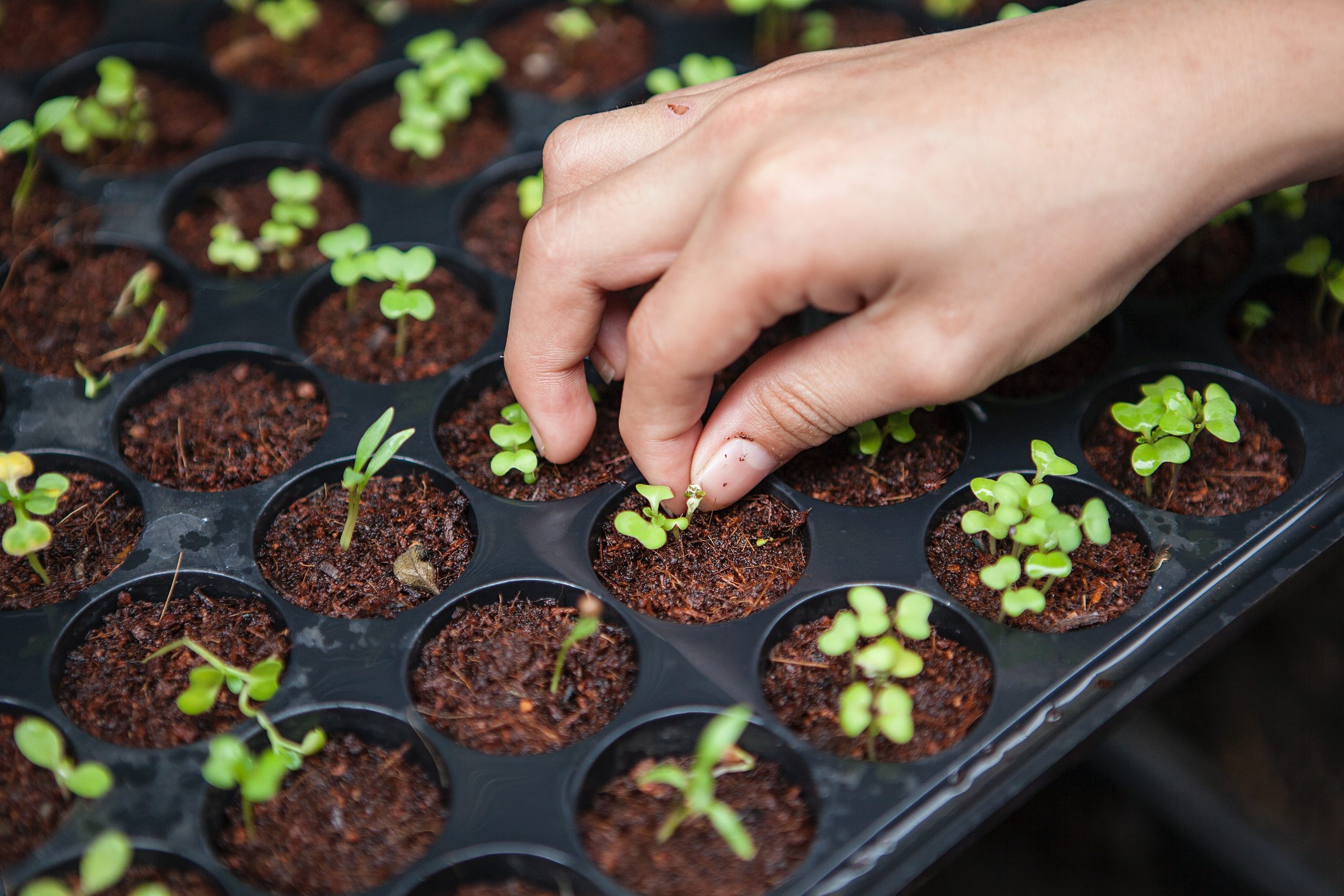
One of the practices used in growing food sources regeneratively and locally in urban areas is urban farming.Urban farming is an agricultural practice that uses all available resources in the city by providing food sources for local communities and has an impact on socio-economic aspects (Orsini et al., 2013). Urban farming helps reduce the environmental impact of food distribution by shortening supply chains and reducing CO2 emissions during transportation (FAO, 2020). Urban farming can improve access to healthy food locally and support local economies through farmers markets, thus it becomes a sustainable approach to this realm.
The Government of the Republic of Indonesia formulated one of the strategies to achieve food security, namely developing urban farming, especially horticultural food for urban communities. Urban farming that is well managed by millennial farmers can help improve the nation’s food security, even though production is not carried out on a large scale (Ministry of National Development Planning / Bappenas, 2021a). Urban farming can be done on open land or integrated with permanent buildings that have been established such as rooftop greenhouses, indoor farming, vertical farming, and so on (Santo et al., 2016).
The selection of horticultural crops in the urban farming implementation strategy is closely related to Indonesia’s high dependence on horticultural food imports, such as garlic, shallots, and chilies (Ministry of National Development Planning / Bappenas, 2019). This import need is also influenced by the consumption level of the three horticultures.
Chili consumption in Indonesia, especially large chilies and cayenne peppers, fluctuated, but increased by 3.04% during 2010-2021 (Ministry of Agriculture, 2022a). In addition to chili, shallots are also an agricultural commodity needed by the Indonesian people even though the price is unstable every year. During 2010-2021, the level of shallot consumption increased by 1,497% per year, but is predicted to decrease in 2022 and increase again in 2023 and 2024 (Ministry of Agriculture, 2022a). In addition, garlic consumption in Indonesia also showed an increase during 2010-2021 of 3.96% per year and is predicted to continue to increase every year (Ministry of Agriculture Pusdatin, 2022b).
Urban farming practices can help improve resource use efficiency, reduce negative impacts on the environment, increase food independence in urban areas, and support local economies. Products produced from urban farming such as vegetables and fruits can be sold directly to local communities or to restaurants and food stores, thus reducing dependence on food supplies from outside the city and supporting the local economy. The organic waste produced can be processed into organic fertilizer and reused in growing plants so that the use of chemical fertilizers can be reduced or even eliminated. This practice reduces negative impacts on the environment and increases the efficiency of resource use (Ellen MacArthur Foundation, 2019; Mohan et al., 2020).
Urban farming practices can also help reduce food loss and waste (FLW). A study conducted by Bappenas with Waste4Change and the World Resource Institute shows that the amount of FLW in 2000-2019 in Indonesia was 115-184 kg/capita/year with vegetable crops being the least efficient in their utilization (Ministry of National Development Planning / Bappenas, 2021b).
Urban Farming Practices in Indonesia
One of the regions that already has an urban farming policy in Indonesia is DKI Jakarta which has an urban agricultural design in 2018-2030 with the final target in the form of: Urban Agriculture Bylaws, 30% productive green open space, 30% increase in production, 1,000 product certifications, and urban agricultural products for national and international. Beside DKI Jakarta, Surabaya and Bogor are cities that have implemented urban farming initiatives and received recognition for their efforts, such as Surabaya’s Food Farm program and the Bogor Gardening movement, which not only improve food security but also provide income opportunities for the local community, as evidenced by Surabaya’s Food Security Care Award in 2022 and Bogor’s recognition by the Milan Urban Food Policy Pact (MUFPP) at the Urban Forum 20.
Strategies and Recommendations
Urban farming can meet urban food security factors, namely food availability, food access, and food quality (Eigenbrod & Gruda, 2015). Government policy on urban development design is needed for the sustainability of urban agriculture and maintaining the balance of urban agriculture, especially in developing countries which have an impact on employment opportunities for their people (Eigenbrod & Gruda, 2015). The following recommendation points are summarized so that they can be a proposal for the implementation of a comprehensive urban farming policy from the selection of targeted crop types to post-harvest management.
- Horticultural Crops
Vegetable crops were chosen because they became a key commodity in urban agriculture and contributed to global food security. Urban horticulture practices are increasing globally by 100 million people with a potential yield of almost 50 kg/m2 per year (Eigenbrod & Gruda, 2015).
- Shared Land
The use of shared agricultural land is suitable to be applied in developing countries, especially for poor groups because it provides land subsidies and is able to meet the nutrition of these groups (Eigenbrod &; Gruda, 2015). The Government of the Republic of Indonesia already has regulations on the provision of green open space as in the Regulation of the Minister of Public Works Number 05 / PRT / M / 2008 concerning Guidelines for the Provision and Utilization of Green Open Space in Urban Areas, the creation of green open space areas can be made in the yard area of residents’ houses and the creation of RTH areas at the RT and RW levels. RTH areas at the household, RT and RW levels can be made keyhole gardens (KGH), which are circular gardens surrounded by stones with easier maintenance, besides that the KGH concept is closely related to permaculture practices (Mohan et al., 2020).
Urban communities can adopt permaculture practices applied by indigenous Papuans in an effort to maintain food security (Putra, 2020), of course, by adjusting the landscape of the urban environment.
- Integration with Other Life Sectors
Effective communication can help promote and involve communities in urban farming activities (Wijaya et al., 2022). Urban farming can be implemented in learning materials in schools (Nasruddin et al., 2016), this is supported by Eigenbrod & Gruda’s (2015) statement if the integration of urban farming into the education and social sectors can improve nutrition and food security. A study conducted by Marchesi & Tweed (2021) shows that social innovation in people living in public housing is beneficial in the circular economy of urban communities. Horticultural experts are needed in developing and implementing urban farming so as to create sustainable and quality urban agriculture (Eigenbrod & Gruda, 2015).
- Strengthening Postharvest Marketing System
Nasruddin et al. (2022) stated that urban farming is a profitable program in Indonesia because it has an impact on the community economy in the community, quality food providers, and improving environmental quality. A quality harvest marketing system is useful in preventing food loss & waste and plays a role in the circular economy process. The government can provide assistance in making MSMEs or cooperatives to regulate logistics activities related to urban farming practices, from the procurement of infrastructure facilities to the marketing of crops.
- National Dashboard Monitoring
The government needs to create and manage a dashboard that integrates information on the implementation of urban farming in cities throughout Indonesia, where urban farming activities are regularly monitored and evaluated to observe their impact on the local economy and to learn from successes and failures for better implementation in the future. The dashboard also includes national-scale awards held periodically to encourage consistent and sustainable implementation of these activities.
Conclusion
Integrating urban farming with a circular economy system has the potential to support the nation’s food security. The implementation of urban farming requires a clear strategy and planning to be successful and can be applied sustainably. The government plays an important role in making public policies and cooperates with educational institutions, the private sector and the community in making and implementing urban farming programs.
References
Bempah, R.T., 2022, Gerakan “Bogor Berkebun” Dapat Apresiasi dari Forum Urban 20, Bima Arya Terima Penghargaan, Kompas.com, Available from: https://megapolitan.kompas.com/read/2022/08/04/10163611/gerakan-bogor-berkebun-dapat-apresiasi-dari-forum-urban-20-bima-arya [Accessed 8 May 2023].
BPS, 2018, Proyeksi Penduduk Indonesia 2015-2045 Hasil SUPAS 2015 (Edisi Revisi), Badan Pusat Statistik, Jakarta, pp. 4, 51.
BPS, 2023, Statistik Indonesia 2023, Badan Pusat Statistik, Jakarta, pp. 296-298.
De Melo, T.A.C., De Oliveira, M.A., De Sousa, S.R.G., Vieira, R.K. & Amaral, T.S., 2022, Circular Economy Public Policies: A Systematic Literature Review, Procedia Comput. Sci. 204: 652-662, doi:10.1016/j.procs.2022.08.079.
DKPP Surabaya, n.d., Bidang Pertanian, Dinas Ketahanan Pangan dan Pertanian Kota Surabaya, Available from: https://dkpp.surabaya.go.id/bidang/pertanian [Accessed 8 Apr 2023].
Eigenbrod, C. & Gruda, N., 2015, Urban vegetable for food security in cities. A review, Agron. Sustain. Dev. 35: 483–498, doi: 10.1007/s13593-014-0273-y.
Ellen MacArthur Foundation, 2019, Cities and Circular Economy for Food, Available from: https://emf.thirdlight.com/file/24/K6LOnIrKMZq-8vK6HoTK6iyBra/Cities and circular economy for food.pdf.
FAO, 2020, Five ways to make cities healthier and more sustainable, Available from: https://www.fao.org/fao-stories/article/en/c/1260457/ [Accessed 12 May 2023].
Gultom, F. & Harianto, G., 2022, Lunturnya Sektor Pertanian Di Perkotaan, J. Anal. Sosiol. 11(1): 49-72 doi: 10.20961/jas.v11i1.56324.
Kementerian PAN-RB, 2022, Songsong Indonesia Emas 2045, Anak Muda Harus Melek Sains dan Tetap Berbudaya, Available from: https://www.menpan.go.id/site/berita-terkini/songsong-indonesia-emas-2045-anak-muda-harus-melek-sains-dan-tetap-berbudaya#:~:text=Pada%20tahun%202045%2C%20Indonesia%20akan,dan%20tidak%20tercerabut%20akar%20budayanya [Accessed 1 Apr 2023].
Kementerian PPN/Bappenas, 2019, Background Study Visi Indonesia 2045, Kementerian PPN/Bappenas, Jakarta, pp. 4, 82.
Kementerian PPN/Bappenas, 2021a, Laporan Kajian Peta Jalan Transformasi Indonesia menuju Indonesia 2045: Adil, Hijau, dan Maju, Kementerian PPN/Bappenas, Jakarta, p. 22.
Kementerian PPN/Bappenas, 2021b, Study Report Food Loss and Waste in Indonesia: Supporting the Implementation of Circular Economy and Low Carbon Development, Kementerian PPN/Bappenas, Jakarta, pp. 6, 15.
Marchesi, M. & Tweed, C., 2021, Social innovation for a circular economy in social housing, Sustain. Cities Soc. 71: 102925, doi: 10.1016/j.scs.2021.102925.
Mohan, S.V., Hemalatha, M., Amulya, K., Velvizhi, G., Chiranjeevi, P., Sarkar, O., Kumar, A.N., Krishna, K.V., Modestra, J.A., Dahiya, S., Yeruva, D.K., Butti, S.K., Sravan, J.S., Chatterjee, S. & Kona, R., 2020, Decentralized Urban Farming Through Keyhole Garden: a Case Study with Circular Economy and Regenerative Perspective, Mater. Circ. Econ. 2: 12, doi: https://doi.org/10.1007/s42824-020-00011-1.
Nasruddin, N., Dwiyantama, Y.D., Muhammad, B., Bowalaksono, A., Ayubi, D. & Pertiwi, S.I., 2022, Urban Farming: Empowerment to Increase Economic, Education, and Nutritional Benefit for the Sub-Urban Community, ASEAN J. Community Engagem. 6(2): 294-306, doi: 10.7454/ajce.v6i2.1159.
Orsini, F., Kahane, R., Nono-Womdim, R. & Gianquinto, G., 2013, Urban agriculture in the developing world: a review, Agron. Sustain. Dev. 33(4): 695-720, doi: 10.1007/s13593-013-0143-z.
Pemerintah Kota Surabaya, 2022, Surabaya Raih Penghargaan Peduli Ketahanan Pangan Tahun 2022, Available from: https://surabaya.go.id/id/berita/70112/surabaya-raih-penghargaan-peduli-ketahanan-pangan-tahun-2022 [Accessed 8 Apr 2023].
Peraturan Menteri Pekerjaan Umum Nomor 05/PRT/M/2008 tentang Pedoman Penyediaan dan Pemanfaatan Ruang Terbuka Hijau di Kawasan Perkotaan.
Pusdatin Kementan, 2022a, Buletin Konsumsi Pangan Volume 13 Nomor 1 Tahun 2022, Pusat Data dan Sistem Informasi Pertanian, Sekretariat Jenderal, Kementerian Pertanian, Jakarta, pp. 44-64.
Pusdatin Kementan, 2022b, Buletin Konsumsi Pangan Volume 13 Nomor 2 Tahun 2022, Pusat Data dan Sistem Informasi Pertanian, Sekretariat Jenderal Kementerian Pertanian, Jakarta, p. 30.
Putra, L.M., 2020, Belajar Ketahanan Pangan dari Masyarakat Adat di Tanah Papua, EcoNusa, Available from https://econusa.id/id/ecoblog/belajar-ketahanan-pangan-dari-masyarakat-adat-di-tanah-papua/ [Accessed 9 May 2023].
Ramirez-Rubio, O., Daher, C., Fanjul, G., Gascon, M., Mueller, N., Pajín, L., Plasencia, A., Rojas-Rueda, D., Thondoo, M. & Nieuwenhuijsen, M.J., 2019, Urban health: An example of a “health in all policies” Approach in the context of SDGs implementation, Global. Health 15: 87, doi: 10.1186/s12992-019-0529-z.
Ringkasan Desain Besar Pertanian Perkotaan Provinsi DKI Jakarta Tahun 2018-2030, Kedeputian Gubernur DKI Jakarta Bidang Tata Ruang dan Lingkungan Hidup.
Santo, R., Palmer, A. & Kim, B., 2016, Vacant Lost to Vibrant Plots: A Review of the Benefits and Limitations of Urban Agriculture, Johns Hopkins Center for A Livable Future.
Susanti, L., 2022, Pemkot Bogor dapat penghargaan Urban Farming di Forum U20, Antaranews.com, Available from: https://megapolitan.antaranews.com/berita/205497/pemkot-bogor-dapat-penghargaan-urban-farming-di-forum-u20 [Accessed 8 May 2023].
Wijaya, S.M., Baliwati, Y.F. & Anggraini, D.I., 2022, Urban Farming in Food Security Efforts at Household Level in Indonesia: Systematic Review, Int. J. Curr. Sci. Res. Rev. 05(09): 3364-3372, doi: 10.47191/ijcsrr/V5-i9-13.